Every brand we talk to has heard both terms. Most of them use them interchangeably. And most of them end up running the wrong strategy for what they're actually trying to achieve.
Influencer marketing and brand ambassadorship are not the same thing. They serve different purposes, operate on different timelines, and deliver different kinds of results. Confusing them is one of the most common and most expensive mistakes brands make in social media marketing.
Here's how to tell them apart, and more importantly, how to know which one your brand actually needs right now.
What Is Influencer Marketing?
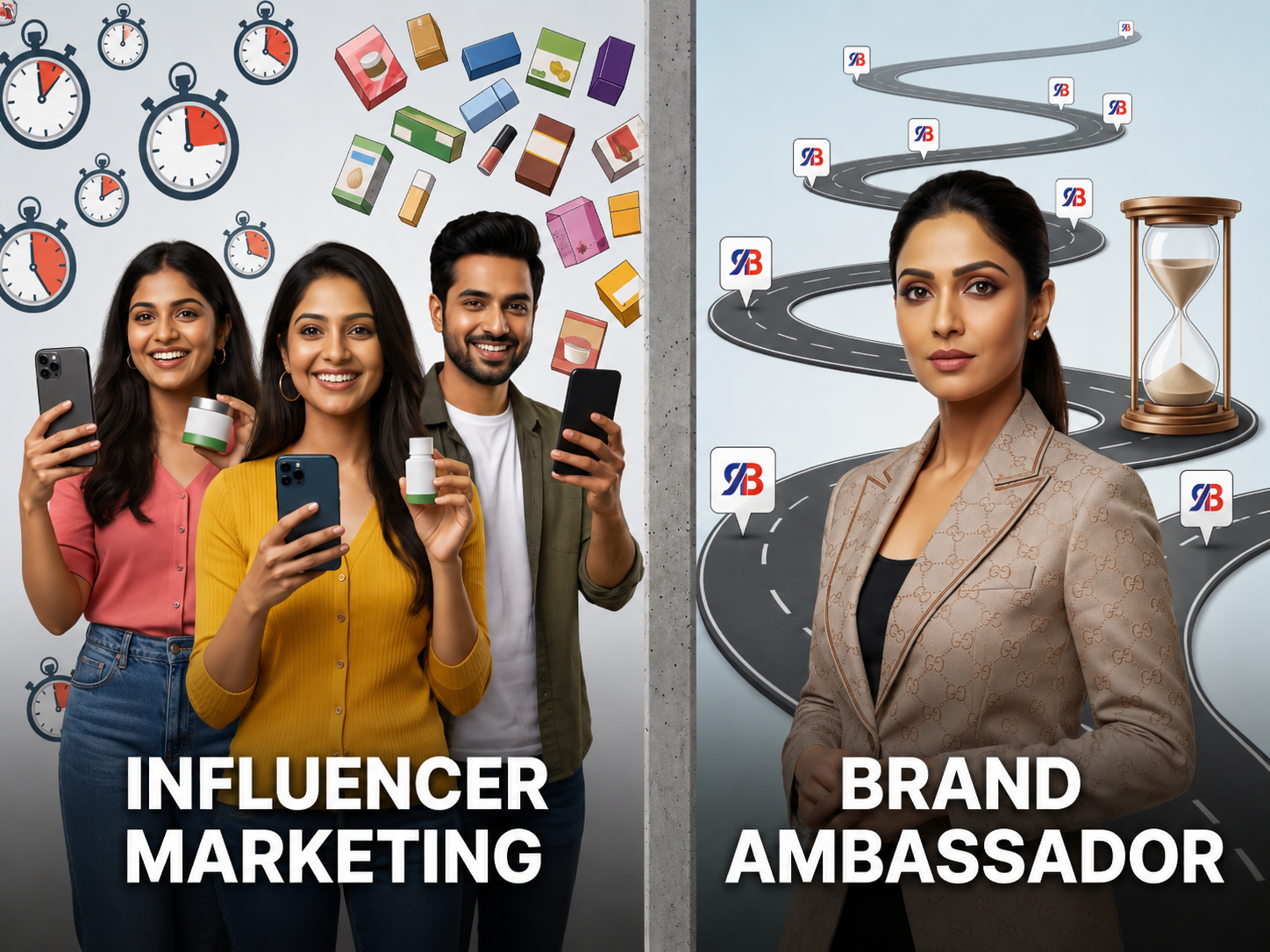
Influencer marketing is a campaign-level tactic. You identify creators who have an audience that overlaps with your target customer. You negotiate a fee or a barter arrangement. They post about your product, usually a Reel, a Story, a YouTube video, in a defined window of time. The campaign runs. You measure reach, impressions, engagement, and conversion. The partnership ends.
This is transactional by design. It's not a bad thing. Transaction-based marketing has a clear ROI and a clear time frame. When it works, it can drive significant product awareness or direct sales in a short period.
Influencer marketing works best when:
- You're launching a product and need immediate reach
- You want to test multiple audience segments simultaneously
- You have a clear, simple message that translates well to a single post
- You want measurable conversion data within a defined time window
What Is a Brand Ambassador?
A brand ambassador is a long-term relationship. This is someone, a celebrity, a creator, a public figure, or even a loyal customer with genuine reach, who represents your brand consistently over time.
An ambassador isn't hired to post once. They're associated with your brand across touchpoints: campaigns, events, product launches, media coverage. The relationship is built on a genuine alignment between who they are and what the brand stands for.
"Influencer marketing is a sprint. Brand ambassador relationships are a marathon. One gets you seen. The other gets you remembered."
Brand ambassador relationships work best when:
- You're building long-term brand equity, not just short-term awareness
- Your brand has a strong identity that needs a human face to carry it
- You're in a category where trust and credibility are primary purchase drivers
- You've found someone whose genuine persona overlaps with your brand values
The Audience Relationship Is Different
This is the most important difference that brands consistently underestimate.
An influencer's audience follows them for their content. When an influencer promotes your product, they're essentially renting access to that audience for a moment. The audience knows it's a promotion. The best influencer content works because the creator's authentic voice still comes through, but it's still a borrowed moment.
An ambassador's audience develops an association over time. They see this person using the product, talking about the brand, attending brand events, across months and years. That repeated exposure builds something deeper than awareness. It builds association. The brand becomes part of how they understand that person's identity.
What Indian Brands Get Wrong
The most common mistake: brands try to use influencer marketing to do the job of brand ambassadorship. They run 20 influencer posts and expect the result to be the kind of brand equity that only comes from a consistent, long-term ambassador relationship.
It doesn't work that way.
Volume of influencer posts does not equal depth of brand perception. Twenty posts from twenty different creators creates reach, not recognition. Recognition, the moment when someone sees your logo and immediately associates it with a feeling, comes from consistency and repetition over time.
The other mistake: brands that do invest in brand ambassadors pick people based on follower count rather than genuine alignment. A celebrity with 10 million followers who has no authentic connection to what your brand does will generate impressions and nothing else. An ambassador with 500,000 followers who genuinely lives in your brand's world will generate trust.
The Budget Question
Brand ambassadorship costs more upfront and delivers value over a longer horizon. Influencer marketing is more modular, you can run small tests with micro-influencers for relatively low investment and scale based on performance.
If your budget is limited, influencer marketing is usually the right starting point. It gives you data, teaches you which audiences respond to your brand, and lets you test messaging without a long-term commitment.
When you have clarity on what's working and you're ready to invest in sustained brand perception, that's when an ambassador relationship makes sense.
The Short Answer
If you need reach, trial, and conversion now, influencer marketing.
If you need brand recognition, category ownership, and emotional loyalty over time, brand ambassador.
Most growing brands need both at different moments in their journey. The key is being clear about which problem you're solving before you decide which tool to pick up.
If you're not sure which one your brand needs right now, that's worth talking through before you spend the budget. Reach out to TOBC Entertainment at info@tobcentertainment.com.