One of the most common conversations we have with brands at TOBC is some version of this: "We have a budget for video content this quarter. What should we make?"
It sounds like a simple question. It isn't. The right answer depends entirely on what the brand is trying to achieve, who they're trying to reach, and where that content will live.
Getting the format wrong is expensive, not just in production cost, but in the opportunity cost of deploying budget on content that doesn't do its job. So here's a clear breakdown of each format, what it's designed to do, and how to know which one your brand actually needs right now.
"The format you choose isn't just a production decision. It's a strategy decision. And it should be made before you open a brief."
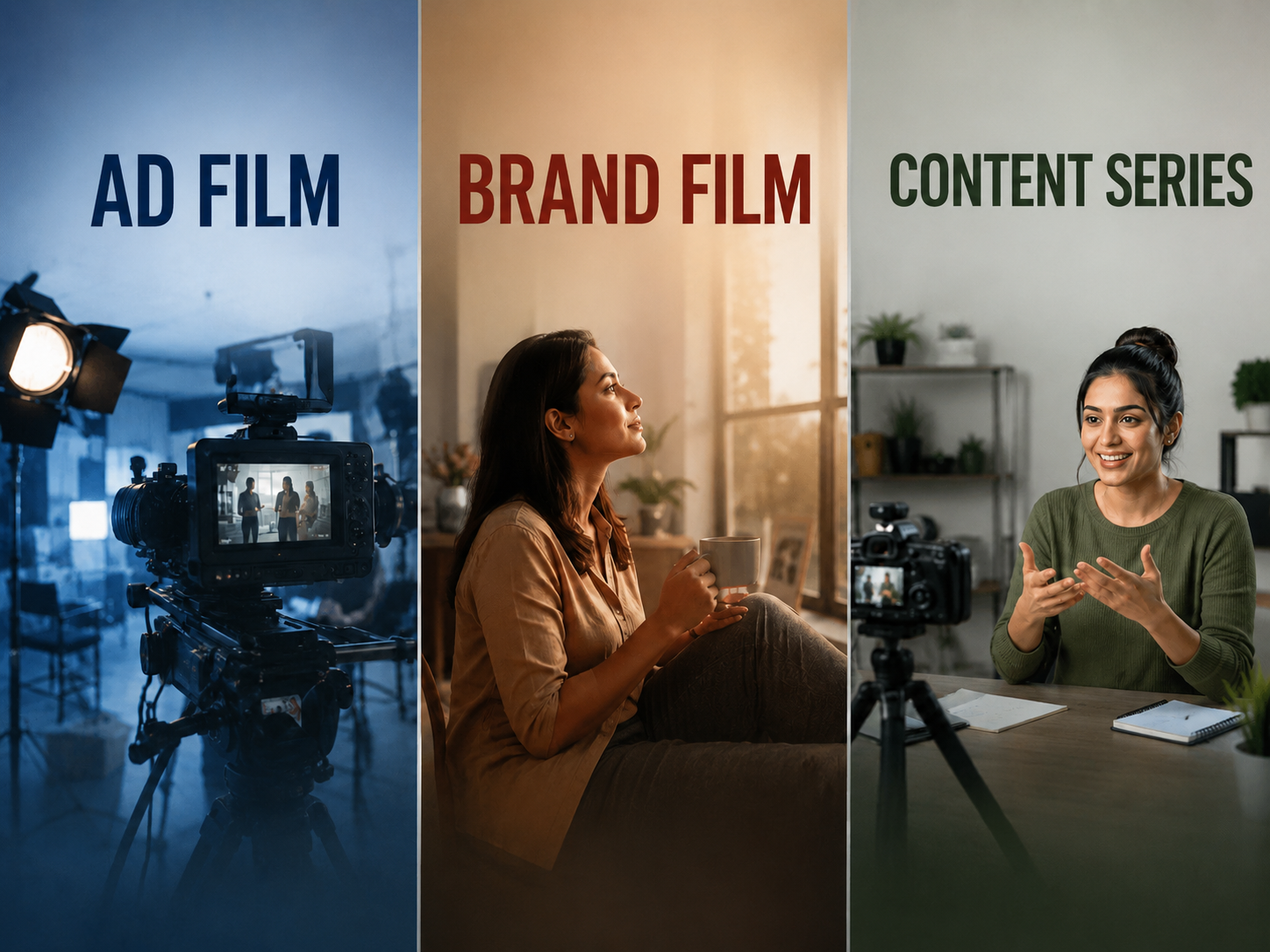
The Ad Film
An ad film is built to do one thing: drive a specific response in a specific window of time. Buy now. Try this. Remember this brand for the next time you're in-store.
Typical duration: 15 to 60 seconds. Distribution: broadcast TV, YouTube pre-roll, Instagram/Facebook paid media.
The ad film is a persuasion tool, not a storytelling vehicle. It works through compression, distilling a message to its sharpest, most attention-grabbing form. Every frame is earning its place. There's no time for atmosphere or nuance.
Ad Film, When It Works
Goal: Immediate conversion, product launch, sale promotion, or brand recall in a crowded category.
Audience: Broad reach, you're buying attention, not earning it.
Budget signal: Lower per-unit, but effective only with significant media spend behind it.
Ask yourself: Do I need people to do something specific in the next 30 days?
The Brand Film
A brand film is longer, slower, and aims at something harder to measure: feeling.
Typical duration: 2 to 5 minutes. Distribution: YouTube (organic + paid), brand website, presentations, events.
Where an ad film tells you what to do, a brand film shows you who we are. It's in the business of building the emotional association that eventually becomes brand preference. The brands that people feel genuinely loyal to, that they talk about to friends without being asked, almost always have a consistent body of brand film work behind that loyalty.
Brand Film, When It Works
Goal: Build brand identity, shift perception, or create emotional connection with a specific audience.
Audience: Targeted, you want the right people to see this deeply, not everyone to see it shallowly.
Budget signal: Higher per-unit, but the asset compounds over time. A great brand film works for years.
Ask yourself: Do people understand what we actually stand for?
The Content Series
A content series is the most ambitious and most misunderstood of the three formats. It's not one piece of content. It's a recurring body of work that builds an audience over time.
Typical format: episodic, 4 to 12 episodes per season, each 3 to 15 minutes. Distribution: YouTube channel, branded microsite, OTT.
Content series work best for brands that have something to say over time, a point of view on their category, genuine expertise, or entertainment value that audiences will return for. The investment is significantly higher than a single film. The return, when it works, is an owned audience that the brand can deploy for years.
Content Series, When It Works
Goal: Build a loyal, owned audience. Establish brand authority in a category. Long-term brand-building.
Audience: Highly targeted, people who care about your category deeply enough to come back.
Budget signal: Highest upfront commitment, longest ROI timeline. Not for every brand, every quarter.
Ask yourself: Do we have something worth saying, week after week, for months?
The Decision Framework
Here's the simplest way to think about it:
- Need sales or awareness this quarter? → Ad film, with media budget.
- Need people to understand and feel something about your brand? → Brand film.
- Ready to build an owned audience around a genuine brand perspective? → Content series.
Most mature brands need all three at different moments. The mistake is using one format to do another's job, making a brand film when you need conversions, or making ad films when you need brand equity.
What TOBC Recommends
The first question we always ask is: what does success look like for this piece of content in 6 months? The answer tells us which format the budget should go into before any creative conversation starts.
If you're figuring out where your video budget should go this year, let's have that conversation before the brief gets written. Email us at info@tobcentertainment.com.