There's a shift happening in Indian brand marketing, and it's been building for a few years now.
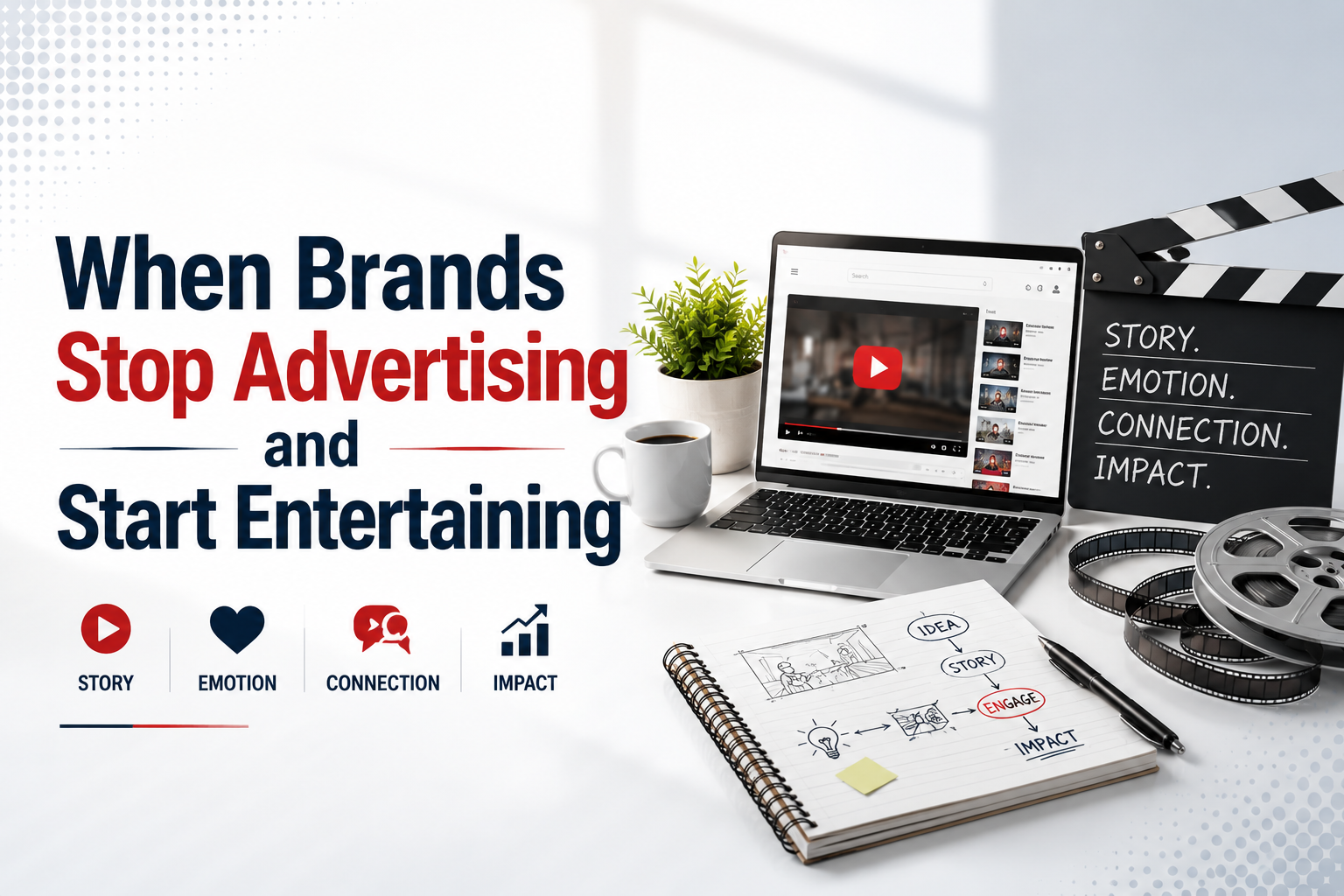
Brands are no longer just making ads. They're making content people actually choose to watch.
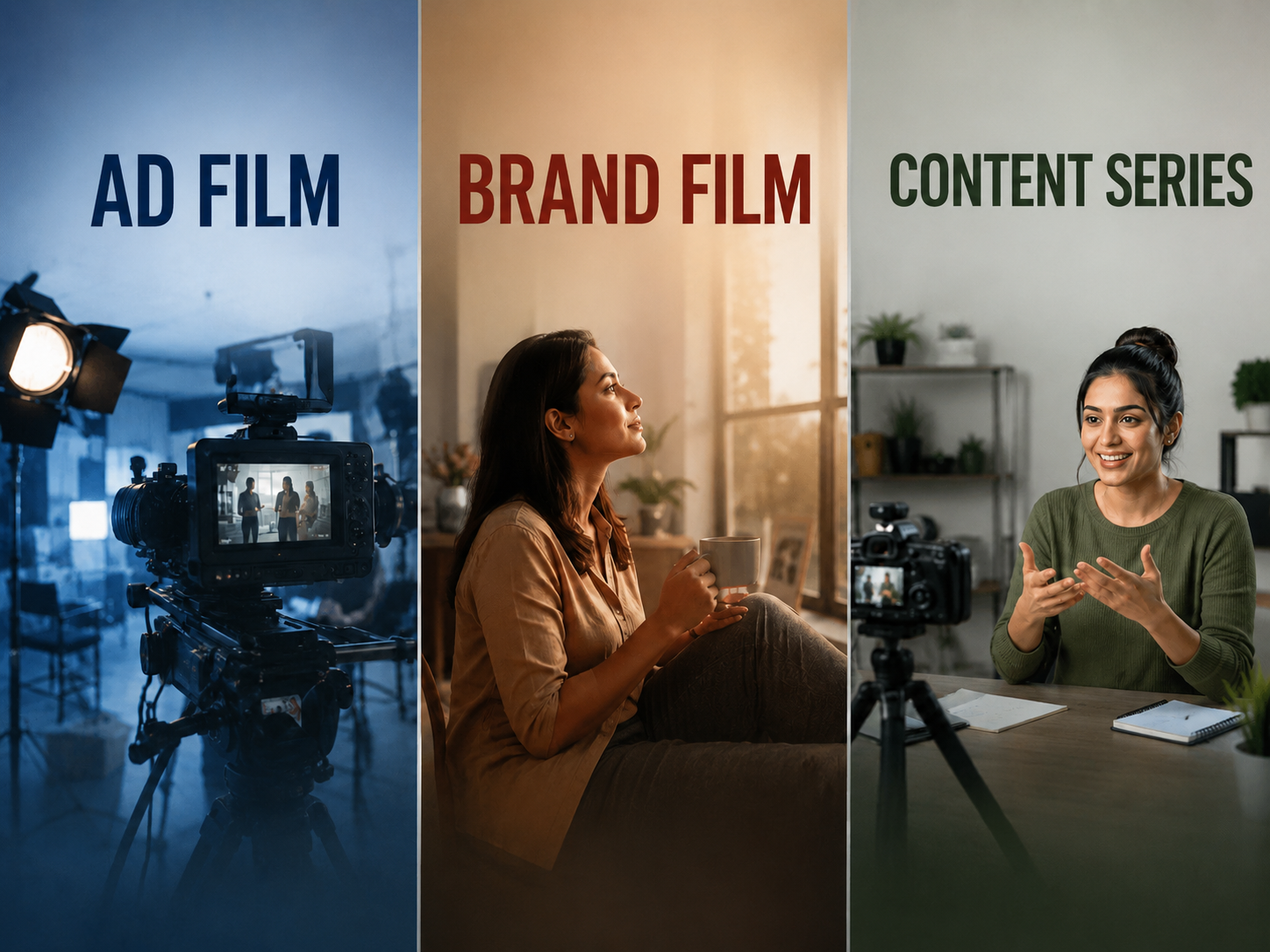
Short films with emotional stories funded by insurance companies. Music videos produced by fashion brands. Web series sponsored by fintech startups. The line between entertainment and advertising is blurring, and the brands pushing that line are outperforming the ones that haven't noticed it yet.
The Ad Skip Problem
Audiences skip ads. They've always tried to. But the tools to do it have never been better, YouTube's skip button, ad blockers, OTT platforms with subscription tiers, and a generation that's grown up treating advertising as noise.
Traditional advertising is fighting for attention in a channel that's structurally designed to avoid it. Entertainment doesn't have this problem.
When a brand publishes a 4-minute short film that genuinely moves someone, they don't skip it. They watch it fully. They share it. They come back to it. The brand doesn't interrupt their experience, it becomes part of it.
"Stop trying to catch people in the gap between content they want. Become content they want."
Why Music Videos Work Particularly Well
Music videos have a specific power that most branded content can't replicate: they're built to be replayed.
When a song connects with someone, they don't watch the video once. They come back. They share it in conversations. The visual world of the video becomes part of how they relate to the song.
For brands, this is remarkable reach with remarkably low diminishing returns. Indian audiences have been conditioned to love music videos, decades of Bollywood, a thriving independent music scene, and platforms like YouTube that have made music video consumption a daily habit. A brand that funds or produces a music video that genuinely resonates gets all of that cultural gravity working in its favour.
The key word is genuinely. A music video that exists only to push a product and fails to be a good piece of music content will land exactly like an ad, which defeats the purpose. The best brand-funded music videos are first and foremost good music videos. The brand association follows naturally.
The Short Film Advantage
Short films operate differently. They're not selling anything in the moment, they're building something over time.
Think of the emotional short films Tanishq, Google India, or Asian Paints have made over the years. None of them are hard selling a product. All of them are building a feeling associated with the brand. That feeling is what drives purchase decisions in categories where the functional difference between products is minimal.
What makes a brand short film work:
- A story that would be compelling even if no brand was attached
- Characters that feel real, not cast-as-perfect
- A connection between the film's emotional territory and the brand's actual identity
- Production quality that signals the brand cares about craft
What kills a brand short film:
- A product mention in every scene
- A story built backward from a product feature
- A forced happy ending that doesn't earn its emotion
- Production that looks cheap relative to the category the brand operates in
The Music Video Production Opportunity for Brands
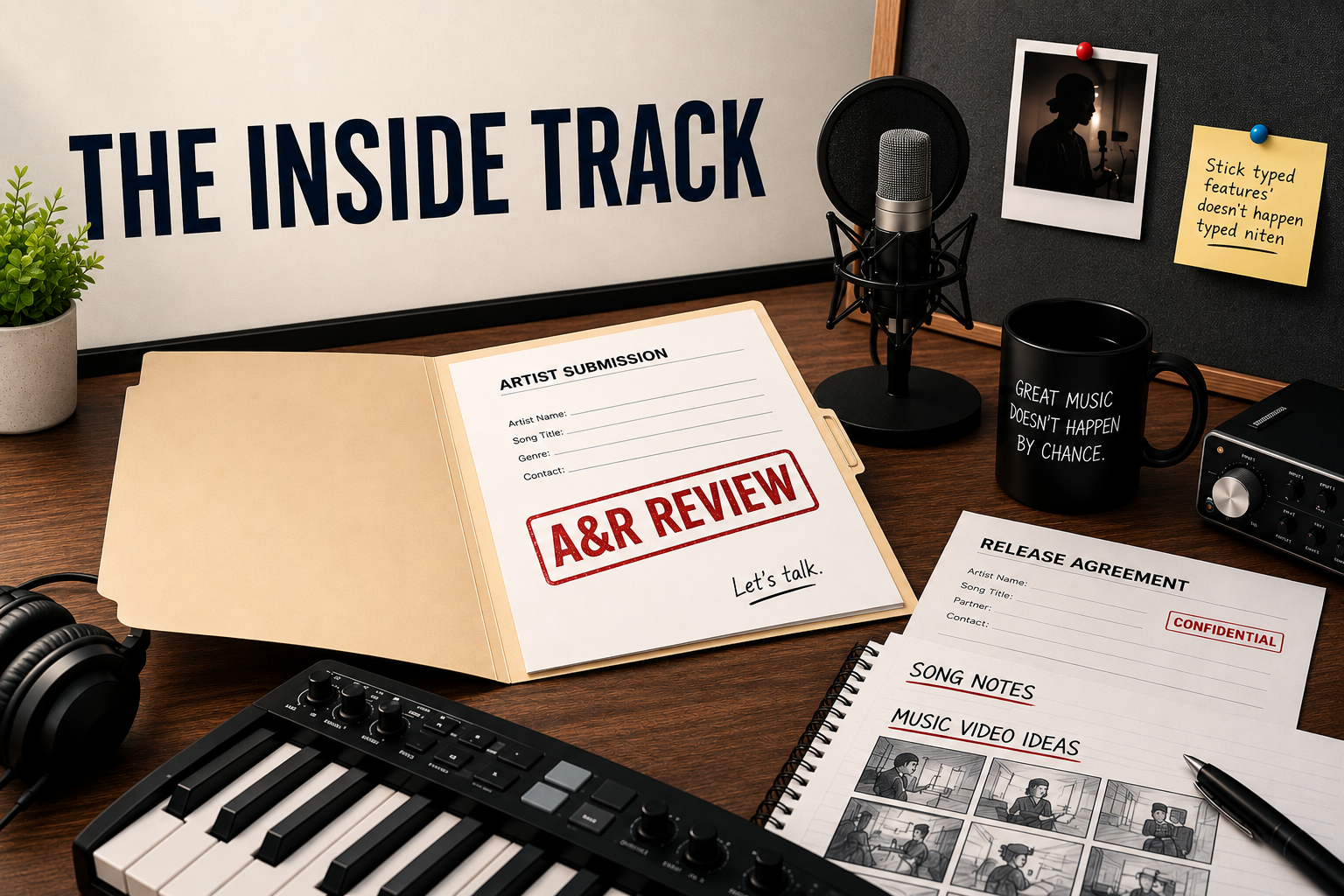
For brands looking to enter this space, music video production is often the more accessible starting point. Costs are contained compared to short film production. Timelines are faster. The distribution mechanism already exists, YouTube, Spotify, Gaana, Instagram. And if the song performs, the brand rides that performance organically.
Brands in fashion, lifestyle, F&B, personal care, and youth-oriented categories have the strongest natural fit with music video partnerships.
At TOBC Entertainment, we've built this at the intersection of our music production capability and our brand production work. We've produced music content distributed through Zee Music, Sa Re Ga Ma, and Times Music, and we've produced brand films that use musical storytelling as the core device. When these two worlds meet well, the output doesn't feel like marketing. It feels like culture.
Is This Right for Your Brand?
Branded entertainment isn't for every brand in every season. Before investing, honestly ask yourself:
Does your brand have a cultural territory, a value, an emotion, a lifestyle area it authentically owns or wants to own? Does your audience consume entertainment content? Are you willing to let the entertainment lead, even when that means not putting the product front and center?
The brands that fail at this space are the ones that can't resist making the product the star. If your legal and marketing team will insist on product placement in every scene, the result won't feel like entertainment.
If you can answer yes to all three, this is a space worth exploring seriously. TOBC Entertainment sits at the intersection of entertainment production and brand marketing. If you're curious about what branded entertainment could look like for your brand, let's have that conversation at info@tobcentertainment.com.