After every brand film that doesn't land the way it should, someone in the room says some version of the same thing.
"Maybe it was the timing." "The algorithm is just harder now." "Our audience isn't engaging with video the way they used to."
Sometimes those things are partially true. Most of the time, they're not the real problem.
"The problem almost never lives where people look for it. Brands blame the platform, the algorithm, the timing. The real culprits are almost always in the brief, the script, or the distribution plan."
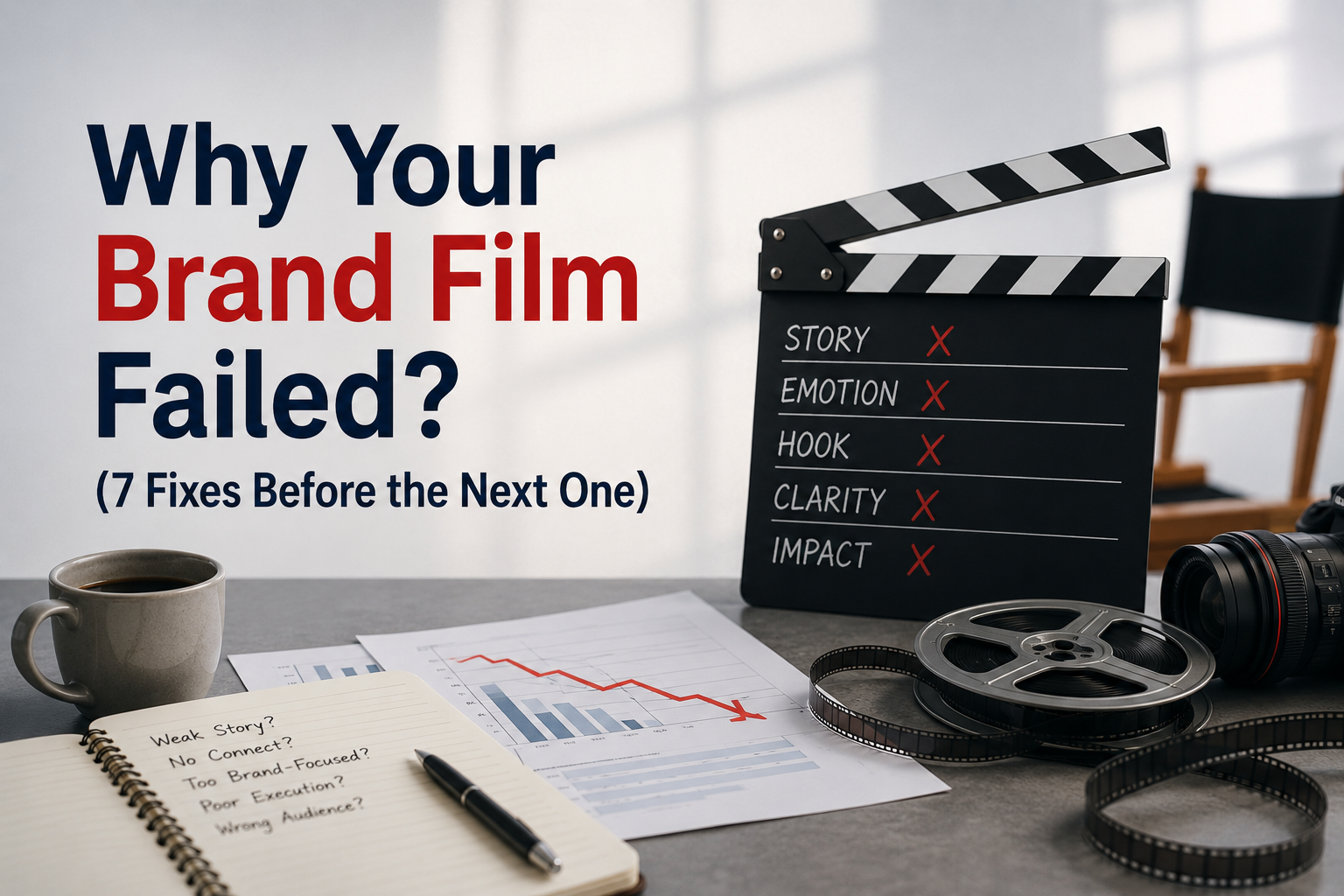
Here are the most common reasons brand films underperform, and what to do differently before the next one.
Problem 1: The Brief Was Too Broad
A brief that says "we want to communicate our brand values, build emotional connection, drive awareness, and support the product launch" is not a brief. It's a wish list.
Every successful brand film has one central idea. One emotion. One specific response it's trying to create in the viewer. When the brief asks for five things simultaneously, the film tries to do all five, and does none of them well.
Before the next one: decide what you want the viewer to feel when it ends. Not think. Feel. Start there, and build everything else around it.
Problem 2: The Script Was Written in a Conference Room
Scripts that come out of internal brand teams tend to carry the weight of too many people's opinions. They're usually over-explained. Every plot point is made explicit. Every emotion is named. Every product benefit is squeezed in.
Real storytelling works through implication. A face held for two seconds says more than a line of dialogue. A detail in the background communicates character. A moment of silence before the music swells does more than a voiceover explaining what you're supposed to feel.
If your script reads like a presentation and not like a story, that's the problem. Bring in a writer who thinks cinematically, not just commercially.
Problem 3: The Wrong Director
Directors are not interchangeable. A director who's exceptional at TVCs may completely miss the emotional register a brand film needs. A director who makes beautiful aesthetic content may not understand how to build narrative tension.
When choosing a director, watch their previous work for the specific thing your film needs. Not their showreel as a whole. The specific quality, emotional intimacy, kinetic energy, cultural texture, comedic timing, that your film lives or dies by.
Problem 4: Production Value Didn't Match the Category
Production value is relative. A brand film for a luxury car and a brand film for a neighbourhood café need to communicate completely different things through their visual quality.
The problem isn't when brands spend too little. The problem is when the production quality contradicts the brand's positioning. A premium skincare brand that produces a brand film with flat lighting and a generic location sends a signal that undermines everything the brand says about itself.
Before the next shoot, ask honestly: does the visual quality of this production match the perception we're trying to build?
Problem 5: No Hook in the First Five Seconds
This one is non-negotiable for digital platforms.
If your brand film doesn't give a viewer a reason to keep watching in the first five seconds, the rest of the film doesn't matter. Not because audiences are unsophisticated, but because they have infinite options and no patience for slow starts.
The hook doesn't have to be loud or provocative. It can be a face with a specific expression. An unexpected sound. A visual that raises a question. Something that creates a reason to stay.
Test your first five seconds in isolation. If they don't compel you to continue, neither will anyone else.
Problem 6: Distribution Was an Afterthought
Most brand films are made for a hero format and then adapted, sometimes badly, for everything else. A three-minute film is cut to 90 seconds, then to 30, with no real thought about what story still works at each duration. Square formats are cropped from horizontal masters. Stories that were built for sound are published in contexts where most viewers watch without audio.
Distribution planning should happen before production begins, not after. Know where this film will live. Build it for those contexts from the script stage.
Problem 7: Metrics Were Wrong
Finally: how are you measuring performance?
If you're measuring a brand film by direct conversion, you're using the wrong metric for the format. Brand films build perception over time. They increase the likelihood of purchase decisions made weeks or months later. Direct attribution is nearly impossible, which is why so many brand film budgets get cut, they can't "prove ROI" the way a performance ad can.
The right metrics for a brand film: brand recall, sentiment shift, share rate, and completion rate. If those are good, the film is working. Trust the medium to do its job over a longer timeline.
What to Do Before the Next One
Have a conversation before you have a production. Bring in your production house at the brief stage, not after the concept is locked. The best brand films come out of a genuine creative collaboration, where the production team's expertise shapes the idea before it becomes a script.
TOBC Entertainment works with brands at every stage of this process. If you've had a film that didn't land the way you hoped, let's talk about what happened and what the next one should do differently. Reach out at info@tobcentertainment.com.