Most brands that work with production houses have a clear picture of what a director does, what a cinematographer does, and what the editor does. The casting director is the one role that consistently stays vague in the client's mind, until they're on set watching a performance that isn't working, and suddenly it becomes very clear what a casting director was supposed to prevent.
Here's a genuine breakdown of what casting directors do, why the role matters more than most brands realize, and what a brand's involvement in the casting process should actually look like.
The Core Job: Finding the Right People
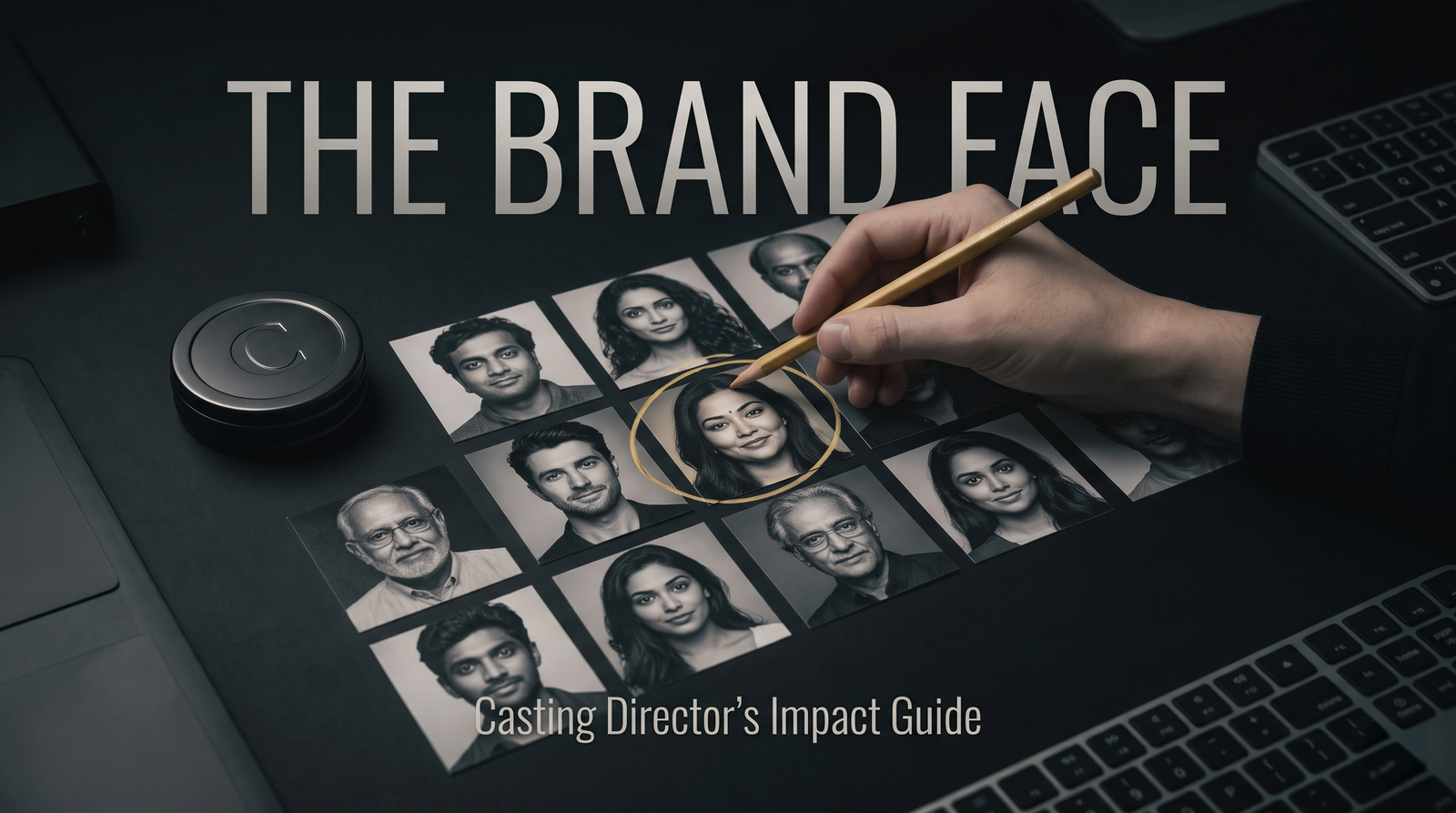
The simplest version of the casting director's job is this: identify, audition, and recommend the performers who will best serve the film's creative goals.
But what that actually looks like in practice is considerably more complex. A casting director maintains relationships with actors, models, real-people talent, and agencies across multiple cities and categories. They know who's available, who's reliable, who performs well under pressure on a shoot day, and who photographs or films differently than they look in person.
They bring options the director and production house wouldn't find through a standard agency search, because they know the talent landscape at a depth that only comes from years of working in it.
"The right face does half the job the script is trying to do. The wrong face can make the most expensive production feel hollow."
Casting for Brand Fit, Not Just Looks
This is where casting for commercial work differs significantly from casting for film or TV.
In a brand film, the performer isn't just playing a character. They're embodying the brand's consumer identity. The person in your ad is the person your audience is meant to see themselves in, or aspire to be. That's a completely different brief than "can this actor hit their marks and remember lines."
A good casting director reads the brand brief and translates it into a human. They're asking: What does this brand's ideal customer actually look like in real life? Not in a stock photo. Not in a competitor's ad. Right now, for this specific audience, in this specific cultural moment, who is that person?
The Audition and Shortlist Process
After receiving the brief, the casting director typically runs through several stages:
- First pass, pulling talent from their network and agencies that broadly match the brief
- Self-tapes or agency submissions, reviewing photos, reels, and early audition content to narrow the field
- Call-backs, bringing the strongest candidates in front of camera to test chemistry, direction response, and how they perform under actual shoot conditions
- Shortlist presentation, delivering a curated set of options to the director and client with their recommendation
The brand usually sees the shortlist, not the full process. That's intentional, the casting director's job is to do the filtering so the decision-makers aren't overwhelmed with options.
What the Brand's Role Should Be
Brands sometimes try to take too much control of casting, and sometimes not enough. Both create problems.
Too much control: insisting on a specific look that doesn't actually serve the brief, overriding the casting director's recommendation because a face "feels right" without being able to articulate why, or making casting decisions based on follower count rather than performance ability.
Not enough involvement: not providing clear guidance about who the audience is, not sharing brand image guidelines, approving casting choices without watching the audition footage.
The right balance: be clear about your audience and brand identity upfront, review the shortlist seriously with the audition footage, and trust the casting director's expertise on what will translate to screen.
Why Casting Is Underinvested in India
In Indian brand production, casting is frequently the area where budget gets cut first. The shoot day is protected. The director fee is protected. Casting often gets squeezed, which leads to rushed searches, limited options, and talent that's good enough but not right.
The irony is that casting has one of the highest impact-to-cost ratios in the entire production. A face that genuinely resonates with your audience will do more for a film's performance than an extra shoot day or a more expensive location.
If you're planning a brand film and the casting budget feels like an afterthought, that's worth reconsidering before anything else gets locked.
Working with TOBC's Casting Process
TOBC Entertainment's casting approach starts at the brief stage, not after the script is locked. When casting thinking is built into the creative development process, the final film has a coherence that shows. The performance, the visual look, and the brand message all pull in the same direction.
If you're in production planning and want to understand what a strong casting process looks like for your project, reach out at info@tobcentertainment.com.